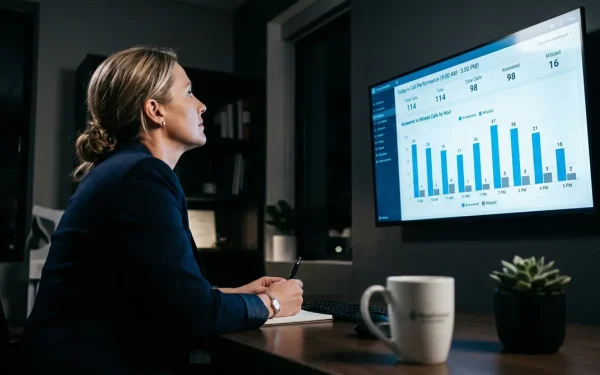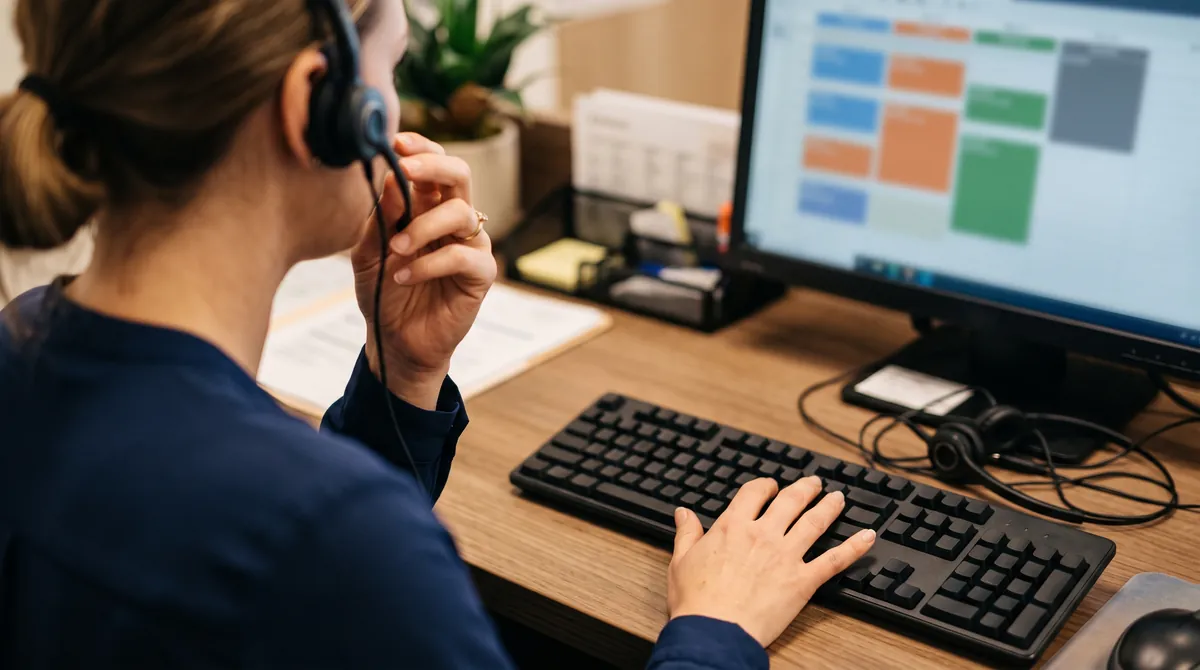
Walk into a top-performing dental office and you’ll notice something before you reach the operatories: the phones get answered. Every time. That’s not luck — it’s a system. Research from Gargle found that nearly 35% of phone calls to dental practices go unanswered, and most practices miss 30–40% of inbound calls. The offices at the top of the pack simply refuse to accept that number.
This article breaks down dental office phone system best practices — the routing, scripts, hold-time standards, and metrics that separate the best-run offices from everyone else. If you’re a practice owner benchmarking against top performers, or an office manager who owns the front desk, this is your checklist.
- Dental Office Phone System Best Practices Start With Answering Every Call
- Call Routing Best Practices for Your Dental Office Phone System
- Greeting Scripts That Turn Callers Into Patients
- Cut Hold Time Before Callers Hang Up
- Dental Practice Call Management: The Metrics Top Offices Track
- How Dentina.Ai Helps
- Put Your Phones on the Top-Performer Standard
- Frequently Asked Questions
Dental Office Phone System Best Practices Start With Answering Every Call
The single biggest difference between top offices and average ones is the answer rate. Patient News, which has tracked data from two million dental practice calls, reports that top practices answer 94% of their inbound calls, while the average office answers about 75%.
Think about what that gap means. On 100 new-patient calls, the average office loses 25 opportunities before a single word is spoken. Patient News pegs the average new dental patient at roughly $2,000 in first-year production, which puts the annual gap between top and low performers well into six figures — we break down the full math in The True Cost of Missed Calls.
Best-run offices treat the phone like a production system, not an interruption. They staff for call volume, not just for the schedule. They know their busiest calling windows — Monday mornings, lunch hours, the 4–6 p.m. after-work stretch — and they make sure someone (or something) is answering during every one of them.
Call Routing Best Practices for Your Dental Office Phone System
Routing is where most dental office phone systems quietly fail. A caller hits a phone tree with six options, gets bounced to a line no one monitors, and hangs up. Top offices keep routing simple and intentional:
- Answer live by the third ring. The American Dental Association recommends staff answer by the third ring with a consistent greeting that includes the practice name and the team member’s name.
- Give new-patient calls a fast lane. If you use a menu at all, keep it to two or three options and route prospective patients to a person immediately.
- Plan coverage for lunch, after-hours, and overflow. These are the windows where calls disappear. A rollover line, a trained backup answerer, or an AI receptionist keeps those callers from hitting voicemail.
- Stop relying on voicemail. According to voicemail research compiled by SellCell, only about 20% of callers leave a voicemail — the other 80% hang up, and many of them dial the next practice on their search results.
The test is simple: call your own office at 12:15 p.m. on a Tuesday and at 6:30 p.m. on a Thursday. Whatever happens to you is happening to your new patients.
Greeting Scripts That Turn Callers Into Patients
Top offices don’t leave the first impression to chance. They script it — not word-for-word robotics, but a consistent structure every team member follows.
The ADA advises developing standardized scripts for common scenarios and having team members role-play them until they’re comfortable. Office manager Joanne Miles, writing in DentistryIQ, recommends a universal greeting that thanks the patient for calling, gives your name, and asks how you can help — delivered with genuine energy, not a census-taker monotone.
A strong greeting structure looks like this:
- Open warm: “Thank you for calling Main Street Dental, this is Maria. How can I help you today?”
- Build rapport before data collection: Ask how they found you or what’s going on before launching into insurance questions.
- Use the caller’s name early and often.
- Close with commitment: Offer two specific appointment times instead of asking “when works for you?”, then restate the details and expectations.
Why does this matter so much? In patient interviews conducted by Patient News, almost half of new patients who didn’t schedule said poor customer service on the call was the reason. The clinical quality of your practice never got a chance to matter.
Cut Hold Time Before Callers Hang Up
Hold time is the silent killer of call conversion. Healthcare call center data compiled by Dialog Health shows that about two-thirds of patients won’t wait on hold longer than two minutes — and 13% won’t wait at all. Meanwhile, the average healthcare call center keeps callers holding for over four minutes.
Best-run dental offices attack hold time from three directions:
- Avoid the hold entirely. The ADA’s guidance is blunt: don’t put callers on hold except for genuine emergencies. Take a callback number and a promise instead — then keep the promise within minutes.
- Separate the quick calls from the long ones. Confirmations, directions, and hours questions shouldn’t tie up the same person handling a complex insurance conversation. Cross-train so anyone can handle the quick wins.
- Offload routine volume. Rescheduling requests, appointment confirmations, and common questions make up a large share of daily calls. Every one you automate or delegate shortens the queue for everyone else.
Dental Practice Call Management: The Metrics Top Offices Track
You can’t improve what you don’t measure, and top offices measure their phones the way they measure production. A serious dental practice call management scorecard tracks four numbers:
- Answer rate. The percentage of inbound calls answered by a person (or system) rather than lost to rings and voicemail. Top practices hit 94%, per Patient News. If you don’t know yours, that’s the first fix.
- Call-to-appointment conversion. Of the new-patient calls you answer, how many end with an appointment on the books? Patient News found top practices convert 85% of calls to appointments, while the average office converts just 53%.
- Hold time and abandoned calls. How long do callers wait, and how many hang up before you get to them? Anything approaching the two-minute mark is costing you patients.
- After-hours and lunch-hour call volume. Count the calls that arrive when no one is at the desk. For most practices, this number alone explains the 30–40% miss rate.
Call tracking software, phone system reports, and call recordings make these numbers easy to pull. Review them monthly, share them with the team, and set targets — offices that post their answer rate next to their production goal tend to close the gap fast.
How Dentina.Ai Helps
Even a well-staffed front desk can’t answer three lines at once, and no one should have to skip lunch to protect the answer rate. That’s the gap Dentina.Ai was built to close — it’s an AI dental receptionist, made for dentists by a dentist, that answers every call 24/7.
Here’s how it maps to the best practices above:
- 100% answer rate. Dentina answers every call — after-hours, lunch, and overflow when your team is with patients — with no cap on simultaneous calls. You set the routing preferences for when Dentina takes over: after a set number of rings, during lunch, or after hours. Across its practices, Dentina handles 15,000+ calls every day.
- Consistent greetings and screening. You customize the greetings, call scripts, and screening questions, so every caller hears your best script on every call — no off days. Dentina always knows your hours and tomorrow’s open-or-closed status, so callers get accurate answers every time.
- Zero hold time for routine calls. Dentina books, reschedules, and cancels appointments in real time in your practice management system, following your scheduling rules — and Dentina resolves 94% of the calls it answers without a human transfer — a different measure from answer rate, which is 100%. It identifies emergency calls, schedules urgent visits, and notifies your staff by email or text with clearly marked high-priority alerts. Practices can enable custom alert rules — plain-English conditions like “notify me if a caller mentions post-op bleeding” — so the right person hears about the calls they care about.
- Metrics built in. After every call, your team gets an email summary with the key details, the full transcript, and the recording. The online portal tracks call logs and metrics like call volume and appointments booked — so measuring your answer rate and conversion stops being a manual project.
The results look like top-performer numbers: on average, practices book 21 appointments per month with Dentina.Ai, representing $5K–$10K+ in production value per month.
Put Your Phones on the Top-Performer Standard
Dental office phone system best practices come down to four commitments: answer every call, greet every caller with a consistent script, keep hold times near zero, and track the numbers monthly. None of it requires heroics — it requires a system that doesn’t have gaps at lunch, after hours, or during the morning rush.
If you want to see what a 100% answer rate looks like in your own practice, Dentina.Ai comes with a 30-day free trial — no setup fees, no long-term commitment. Book a demo at dentina.ai/book-a-demo and hear it handle a call yourself.
Frequently Asked Questions
What is the ideal answer rate for a dental office phone system?
Top-performing practices answer about 94% of inbound calls, according to call tracking data from Patient News, while the average office answers around 75%. Aim for as close to 100% as your coverage allows — every unanswered new-patient call is a patient who likely books elsewhere.
How quickly should a dental office answer the phone?
The American Dental Association recommends answering by the third ring with a consistent greeting that includes the practice name and the team member’s name. Fast pickup signals to callers that the rest of their experience will be just as attentive.
What metrics should a dental practice track for call management?
Four numbers give you the full picture: answer rate (the percentage of inbound calls answered), call-to-appointment conversion (the percentage of new-patient calls that book), hold time and abandoned calls (how long callers wait and how many give up), and after-hours and lunch-hour call volume (calls arriving when no one is at the desk). Review them monthly and set team targets alongside production goals.
Do patients leave voicemails when a dental office doesn’t answer?
Mostly, no. Voicemail research compiled by SellCell shows only about 20% of callers leave a voicemail — the other 80% hang up. For a dental office, many of those callers simply dial the next practice on their search results, which is why voicemail is not a coverage plan.
Can an AI receptionist follow our office’s specific phone scripts?
Yes. Dentina.Ai lets you customize the greetings, call scripts, and screening questions, plus the call-routing preferences that decide when it picks up — after a set number of rings, during lunch, or after hours. It answers 24/7, resolves 94% of the calls it answers without a human transfer, and sends your team an email summary with the full transcript and recording after every call.
Sources
Gargle — Your Phone Is Ringing: Are You Losing Patients or Booking Them? ·
Patient News — Mastering Dental Phone Conversion ·
American Dental Association — Patient Intake (Practice Management) ·
SellCell — Voicemail Statistics ·
DentistryIQ — Opportunity Calls: Tips for Building Dental Patient Relationships Over the Phone ·
Dialog Health — Healthcare Call Center Statistics