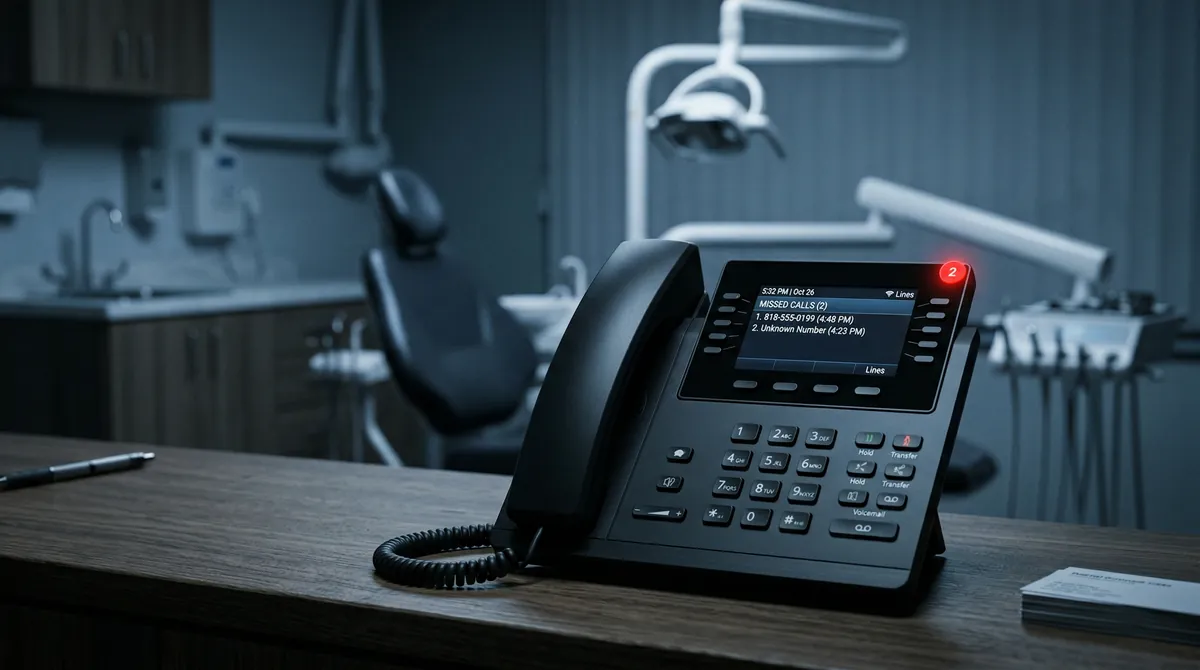
Most dental practices generate plenty of interest—they just don’t keep it. Research shows that the average practice loses between $100,000 and $140,000 each year from missed calls alone, according to call tracking data from Weave and Peerlogic. Nearly 80% of missed calls are related to booking requests, and 65% come from potential new patients, according to TrueLark’s analysis of 8 million patient conversations. This guide walks you through a complete, full-funnel strategy to attract more new patients and actually convert them into scheduled appointments. Understanding how to get more new patients dental practices need is about more than marketing — it’s about converting the interest you already generate.
Whether you’re looking to grow faster, replace patients who moved away, or fill open schedule slots, there’s a tactic here that works. The key isn’t doing everything at once. It’s knowing which channels deliver the highest return and which ones you can execute right now. Figuring out how to get more new patients dental practices need doesn’t have to be overwhelming—it just needs to be intentional.
Key takeaways: The average dental practice loses $100,000–$140,000 annually from missed calls alone, with nearly 80% of those being booking requests (TrueLark). A full-funnel approach — local SEO, referrals, reputation management, social media, and paid ads — drives new patient interest, but none of it matters if the phone goes unanswered. Referred patients deliver significantly higher lifetime value, and practices with a 4.5+ Google rating win significantly more clicks. The highest-ROI fix for most practices is answering every call — AI receptionists can achieve a 100% answer rate and book directly into your PMS around the clock.

- Build a Local SEO Foundation That Patients Actually Find
- Use Paid Advertising to Fill Schedule Gaps Fast
- Turn Your Best Patients Into a Referral Engine
- Strengthen Your Online Reputation
- Get Involved in Your Community
- Leverage Social Media the Right Way
- The Strategy Nobody Talks About: Actually Answering the Phone
- How to Get More New Patients Dental Practices Need: The Full Checklist
- Conclusion
- Frequently Asked Questions
Build a Local SEO Foundation That Patients Actually Find
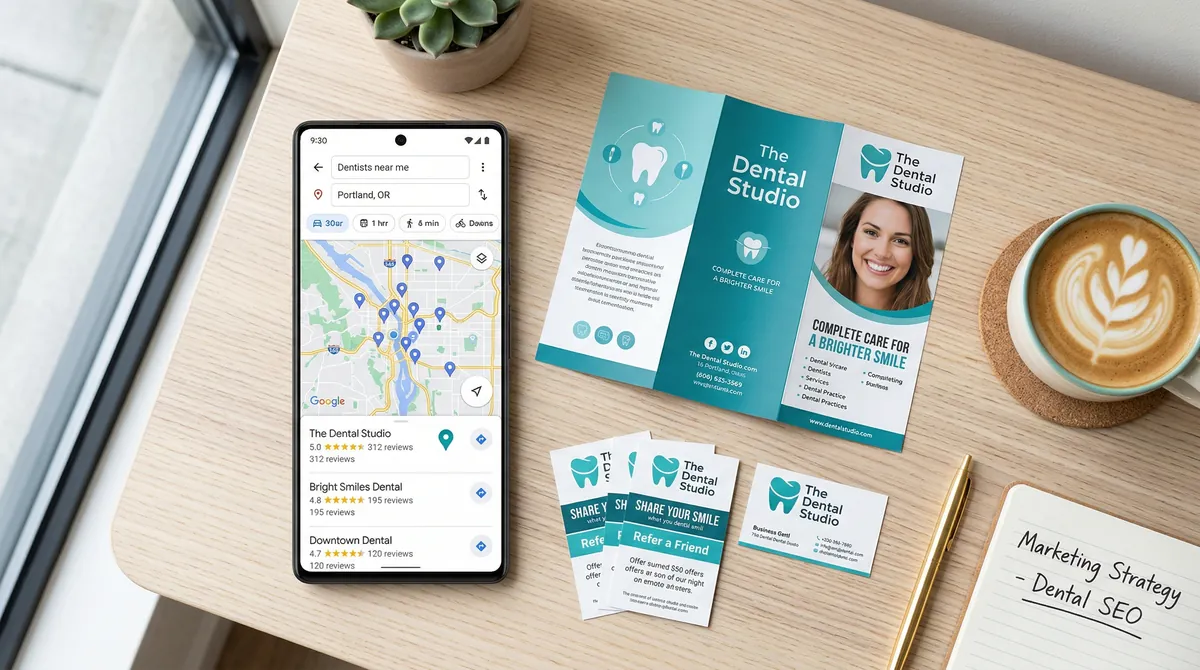
Seventy-seven percent of dental patients search online before choosing a provider, according to research from Dandy and Isurus Market Research. If your practice isn’t showing up in those searches, you’re losing patients who already want what you offer. Local SEO doesn’t require a marketing degree—it’s about completing the basics and then staying consistent.
Google Business Profile Optimization
Start here. Claim your Google Business Profile if you haven’t already, then complete every field. Your practice name, address, phone number, and business hours must be identical across every online platform—Google, Facebook, Yelp, your website. Inconsistency confuses search engines and patients.
Post regularly to your profile. Google rewards fresh content, and patients see your updates directly in search results. Share before-and-after photos, announce new services, highlight your team, or post tips about oral health. Aim for one post per week.
Choose the right categories. Select primary categories like “Dental Clinic” and “Dentist,” then add secondary ones that match what you offer—”Cosmetic Dentist,” “Dental Implants,” “Orthodontist,” etc. This helps the right patients find you.
On-Site SEO for Dental Practices
Your website needs to answer the questions patients are actually asking. Create dedicated service pages for teeth whitening, dental implants, root canals, and whatever else you specialize in. Each page should include your location and the service name in the title tag and the first paragraph—these are ranking signals.
Schema markup tells search engines what your content is about. For a dental practice, this means adding structured data for your address, phone number, hours, and services. Most modern website platforms handle this automatically, but ask your web team to confirm.
Build topic clusters around what you offer. If you do Invisalign, write one main page about it, then supporting pages on cost, the process, and who it’s best for. Link them together. This signals expertise and keeps patients on your site longer.
Use Paid Advertising to Fill Schedule Gaps Fast
Organic growth takes time. If you have gaps in your schedule this month, paid ads close them. Google Ads for high-intent keywords—”dentist near me,” “teeth cleaning near [city],” “emergency dentist”—usually convert faster than social ads because patients are already searching for help.
Budget for $150 to $250 per new patient acquisition (CAC) for dental PPC. If your average patient lifetime value is $3,000 to $5,000, that math works. Start with a small test—$500 to $1,000 for two weeks—measure results, and scale what works.
When does PPC make sense? If you’re new to a market, have sudden schedule openings, or need to test messaging before investing in organic. When should you skip it? If you already have a full schedule or if your organic strategy is delivering steady growth. Paid ads are a lever, not a lifeline.
Turn Your Best Patients Into a Referral Engine
Your best new patient source isn’t a marketing channel—it’s the patients you already have. Referred patients tend to stay significantly longer and refer others at higher rates. They also tend to convert faster and require less follow-up.
Structured Referral Programs
Ask for referrals, but make it easy. Create a simple card or digital form that patients can share with friends and family. Offer a modest incentive—$25 to $50 credit toward treatment for both the referrer and the new patient works well. Dual incentives outperform one-sided offers.
Train your front desk to ask. The best time is when the patient is happy—right after a successful whitening appointment, after they’ve just told you how much they appreciate their smile, or when they’re raving about their implants. You don’t need a sales pitch. “We love our patients so much, we’d love to meet your friends and family. Here’s a referral card you can share,” works.
Why Referrals Are Your Highest-Value Channel
Referred patients come with built-in trust. They’ve heard directly from someone they know that you’re good. They show up, they stick around, and they refer others. This creates a multiplier effect that no ad can replicate.
Referred patients consistently show higher lifetime value than patients acquired through other channels, and they tend to refer additional patients over their lifetime — creating a compounding growth effect.
A dual-incentive program that rewards both the referrer and the new patient can generate a meaningful share of new patient volume for your practice. If your practice needs 20 new patients per month and referrals represent 15%, that’s 3 patients every month on autopilot.
Strengthen Your Online Reputation
Google reviews are the #1 trust signal for prospective patients. Practices with a 4.5+ rating and consistent reviews get clicked more, trusted more, and chosen more. You can’t ignore this.
Ask for reviews after key moments: one week after a cleaning, two weeks after more complex treatment. Keep it simple—a text message link is fastest. A script that works: “We appreciate your trust in us. If you had a good experience, we’d love your honest review on Google. It takes 60 seconds.”
Respond to every review—good and bad. A quick thank-you to positive reviews shows other patients you care. For negative reviews, respond professionally and privately offer to make it right. Most patients rescind negative reviews if you solve the problem.
Get Involved in Your Community
Local sponsorships, school dental programs, and charity events build goodwill and top-of-mind awareness. Sponsor the local soccer team, offer free screenings at the school health fair, or donate cleaning services for a nonprofit fundraiser. You’re not expecting an immediate return—you’re building a presence that compounds over years.
This works best when you’re consistent and visible. Pick one or two community initiatives and do them well, rather than spreading yourself thin.
Leverage Social Media the Right Way
Most dental practices treat social media like a broadcast channel—post and pray. That doesn’t work. Social media is for building familiarity and trust before the phone rings.
What actually converts: before-and-after photos (anonymized, of course), behind-the-scenes content of your team, and patient education tips. A 30-second video on how to floss better gets more engagement than a stock photo of a smile. Team content—introducing your hygienist, showing your office, sharing team wins—makes you human.
Platform priorities: Instagram and Facebook for general audience, TikTok if you want to reach younger patients (30s and down). Post consistently—at least 3 times per week on Instagram, 4 times per week on Facebook. Use captions that encourage engagement: “What’s your biggest challenge with flossing? Comment below.”
Paid social (Facebook/Instagram ads) works well for special offers and seasonal campaigns. Budget $200 to $500 per month to start, test different creative, and scale what drives traffic to your booking page.
The Strategy Nobody Talks About: Actually Answering the Phone
Every strategy in this article is pointless if the phone goes unanswered. When you’re figuring out how to get more new patients dental marketing alone won’t cut it — you have to answer when they call. Yet most dental practices don’t measure their answer rate. They should.
The Missed Call Problem in Dentistry
Studies show that dental practices miss 30 to 40% of incoming calls during business hours. That’s not a staffing failure—it’s a capacity problem. During lunch, when the hygienist is charting, when your front desk is processing paperwork, the line rings unanswered.
What happens? Research from Resonate AI shows that only 14% of new patients leave a voicemail when calls go unanswered — the rest move on, often to a competing practice. That missed call represents $10,000 or more in lost lifetime patient value. For a practice fielding 50 calls per week, a 25% miss rate costs $150,000 to $175,000 per year.
The average dental practice misses 30 to 40% of inbound calls, and over 80% of those calls are appointment booking requests. This represents $100,000 to $140,000 in annual patient acquisition loss.
Why the Front Desk Can’t Do It Alone
Your front desk team isn’t underperforming—they’re overbooked. A single receptionist can only juggle so many tasks: answering phones, checking in patients, processing payments, scheduling, and managing patient questions. Add lunch breaks, staff absences, and after-hours emergencies, and gaps appear.
Hiring another full-time staffer solves the problem but doubles your salary costs. A part-time virtual receptionist helps but still isn’t available 24/7. What if there was a solution that answered every call, never took a break, and directly booked appointments into your PMS?
How AI Answering Changes the Math
An AI receptionist answers 100% of calls, 24/7. It qualifies the caller, answers routine questions (hours, location, insurance, new patient packet), and books appointment requests directly into your practice management system in real time. No voicemail tag delays. No “we’ll call you back” friction.
Here’s what moves the needle: Dentina.Ai customers report that 40% of their AI-booked appointments are new patients. That’s higher than organic, referrals, and ads for most practices. The AI never misses a call. It never puts someone on hold. It never forgets to offer a discount code. It’s consistent, 24/7, and integrated with your PMS—Dentrix, Open Dental, Eaglesoft, Curve, and 10 other major systems.
Dentina.Ai offers Standard, Premium, and Enterprise packages scaled to your call volume—a fraction of the cost of hiring another team member. If you’re currently missing $100,000+ in patient acquisition from unanswered calls, the return on investment speaks for itself.
See how Dentina.Ai’s AI receptionist works with your PMS →
| Feature | Traditional Front Desk | Answering Service | AI Receptionist (Dentina.Ai) |
|---|---|---|---|
| Call Answer Rate | 65–80% | 95%+ | 100% |
| Hours Available | Office hours only | Office hours + some overflow | 24/7/365 |
| Cost Range | $28,000–$40,000/year (salary) | Typically $150–$300/month | Starting at $319/mo (per location, billed annually, up to 3 providers) |
| PMS Integration | Manual entry (delays, errors) | Usually not integrated | Real-time direct integration |
| Patient Experience | Human touch, variable consistency | Transferred call, potential wait | Natural conversation, instant booking |
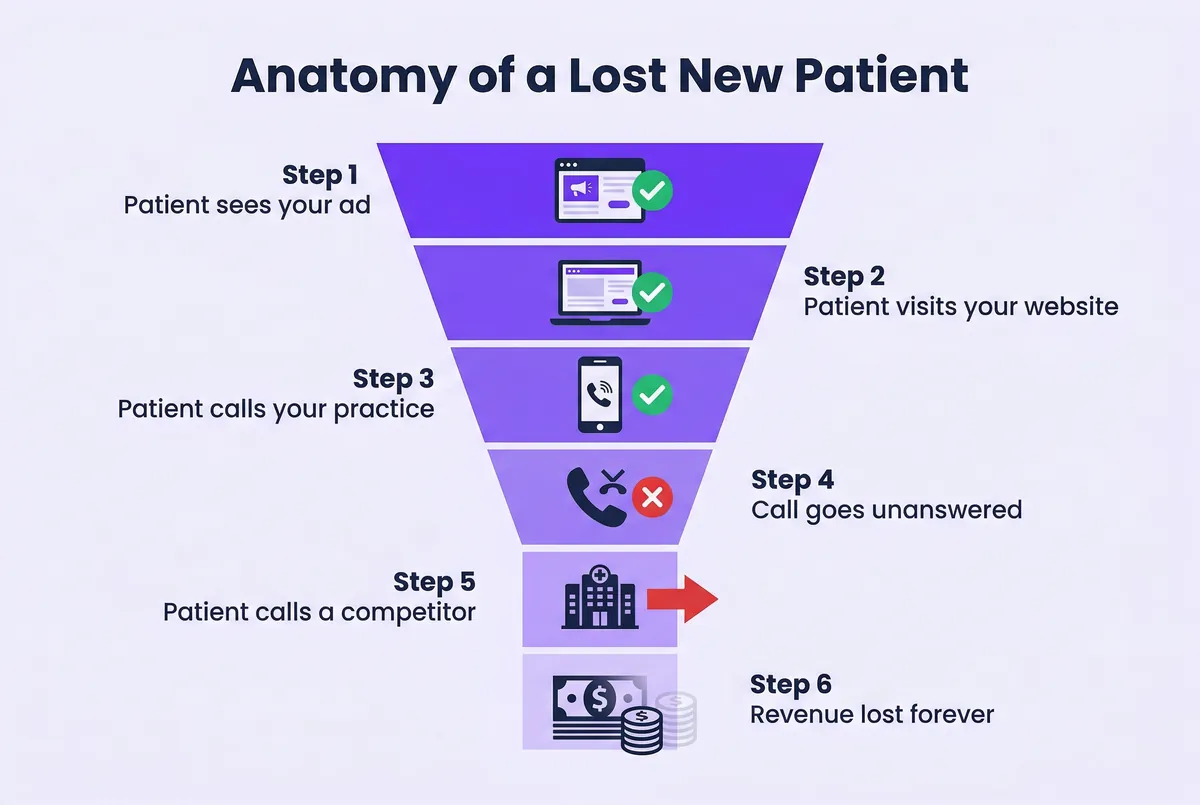
The math works because every call counts. If your practice currently misses 10 calls per week and those calls represent $10,000 average lifetime value, that’s $1.8 million in annual opportunity cost. An AI receptionist that captures even half of those—starting at $319/month (per location, billed annually)—pays for itself on the first call.
How to Get More New Patients Dental Practices Need: The Full Checklist
You now have six major levers to pull. Here’s how to prioritize and execute:
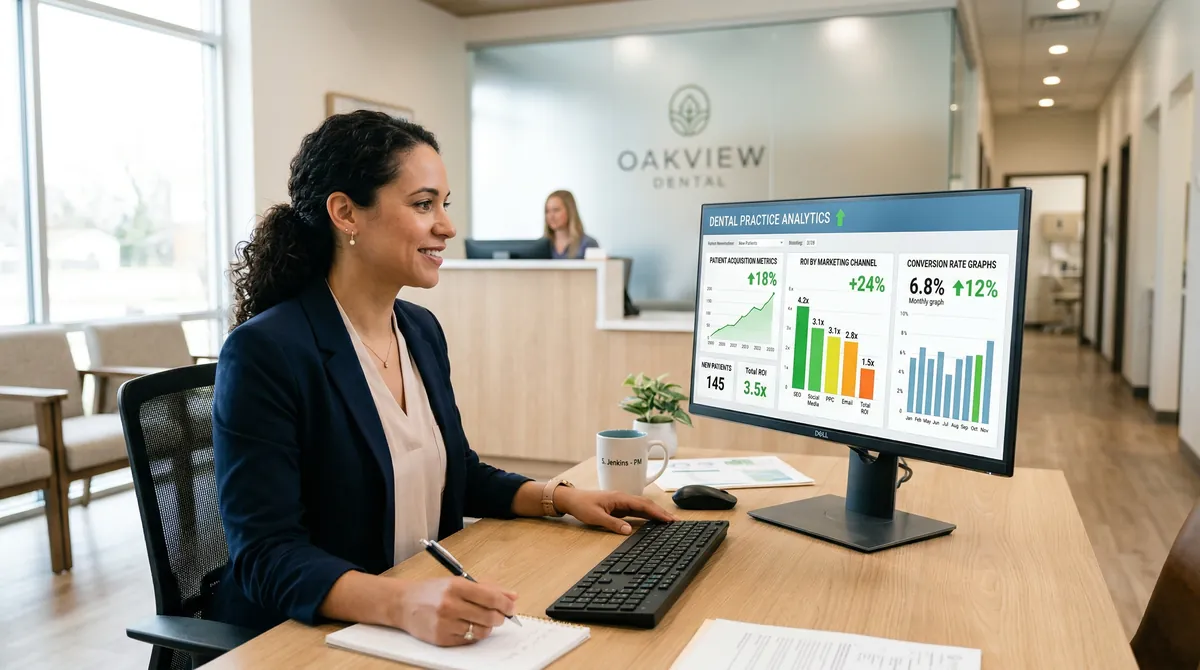
- Measure your current baseline. Track your phone answer rate, missed call percentage, and where new patients are coming from. You can’t improve what you don’t measure.
- Claim and optimize your Google Business Profile. This is free and takes one hour. It shows up immediately and influences 71% of new patient decisions.
- Fix the phone problem first. Whether it’s a second line, a part-time receptionist, or an AI receptionist, stop leaving money on the table by missing calls. This is your highest-ROI fix.
- Ask your best patients for referrals. Create simple referral cards and train your team to ask. Referred patients are your highest-value acquisition source.
- Get reviews consistently. One week after an appointment, ask for a Google review via text. Respond to every review. This compounds over time.
- Test paid advertising if you have gaps. Google Ads for high-intent keywords. Start with $500 to $1,000 and measure. Scale what works.
- Post on social media 3 to 4 times per week. Before-and-after, team content, patient education. Don’t overthink it, just be consistent.
- Get involved locally. Sponsor one community initiative and show up consistently. This builds top-of-mind awareness and goodwill.
Every tactic here feeds the phone. Every strategy succeeds or fails based on whether you can actually book the appointment when someone calls. That’s why answering every single call matters.
Conclusion
If you’re wondering how to get more new patients dental practices can attract, it starts with one simple insight: most practices don’t have a patient acquisition problem. They have a patient retention and conversion problem. You’re already getting the phone to ring. You’re just not answering it, or not booking it, or not delivering an experience that leads to referrals.
That changes today. Implement the checklist above, starting with your phone, then your referral program, then your online presence. These three moves alone typically add 15 to 25% to new patient flow within 60 days.
If you’re ready to stop missing calls and start capturing every booking opportunity, Dentina.Ai can help. Our AI receptionist answers every call, books directly into your PMS, and handles the routine work so your team can focus on patient care. Let us show you how 40% of our booked appointments are new patients who called at 9 p.m. on a Saturday—and got booked, not voicemail. Schedule a quick demo. Your next patient is probably calling right now.
Frequently Asked Questions
How many new patients should a dental practice get per month?
It depends on your practice size and goals. A solo practice with one hygienist typically needs 8 to 15 new patients per month to stay busy. A three-chair practice needs 15 to 25. A larger group practice might target 30+. The formula: calculate your total available appointment slots per month, subtract your regular patients’ recurring appointments, and that’s your gap. That’s your target.
What is the average cost to acquire a new dental patient?
It ranges from zero (referral from an existing patient) to $250+ per patient (for paid advertising). Typical benchmarks: organic search ($50–$150), referrals ($0–$50 if you use an incentive), paid ads ($150–$250), and social media ($50–$150). The best approach mixes channels. If you’re only using paid ads, your CAC will be higher. If you’re leveraging referrals and organic, it drops significantly.
How do I track where my new patients are coming from?
Ask at check-in: “How did you find us?” or “Where did you hear about our practice?” Record it in your PMS. Add UTM parameters to your digital ads and landing pages so you can track clicks. For phone calls, ask the front desk to log the source on the patient chart. After 30 days, pull a report. You’ll see patterns. Focus your efforts on the top 2 to 3 sources.
What’s the biggest mistake dental practices make with marketing?
They assume that getting someone to the website or to call is the finish line. It’s not. The hardest part is actually booking the appointment. Practices spend thousands on ads and SEO but lose 20 to 35% of callers because the phone isn’t answered or the person who answers can’t schedule. Fix that first, then invest in driving more traffic.
How can I get more new patients without increasing my ad spend?
Maximize your existing channels. Ask for more referrals and make it easier for patients to share. Optimize your Google Business Profile and post regularly. Answer every phone call and book every appointment first call if possible. Ask for reviews consistently. Improve your social media strategy—post better content, engage with comments, run occasional organic promotions. Many practices leave 30 to 40% of their current revenue on the table by not executing the basics well. Start there.