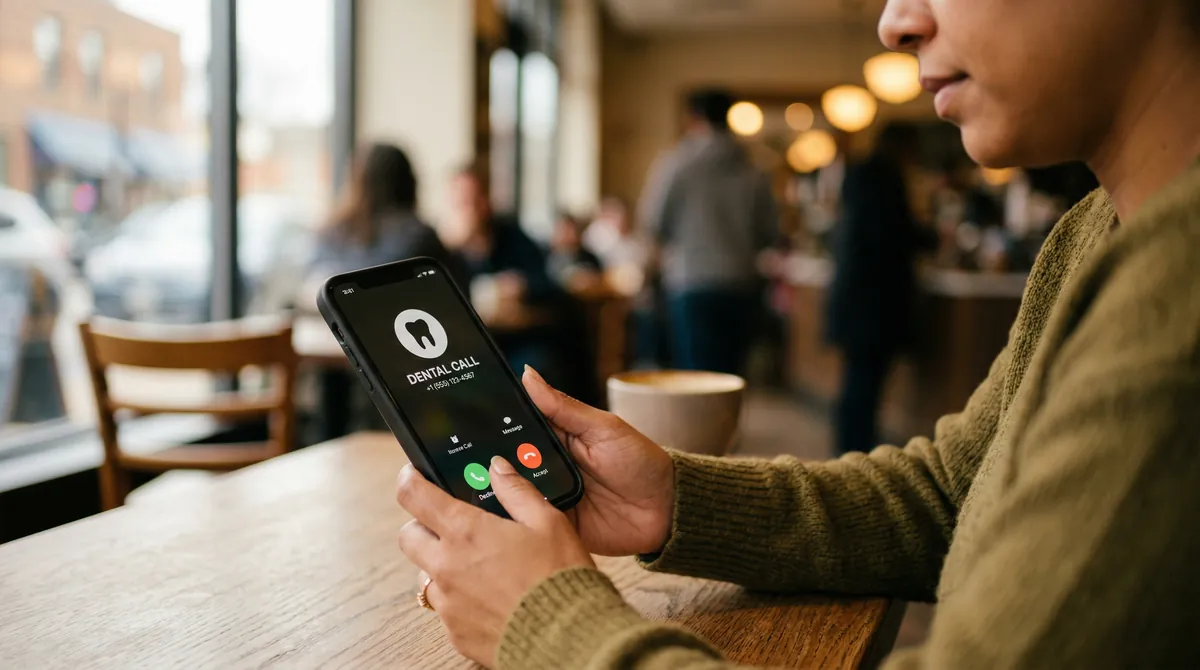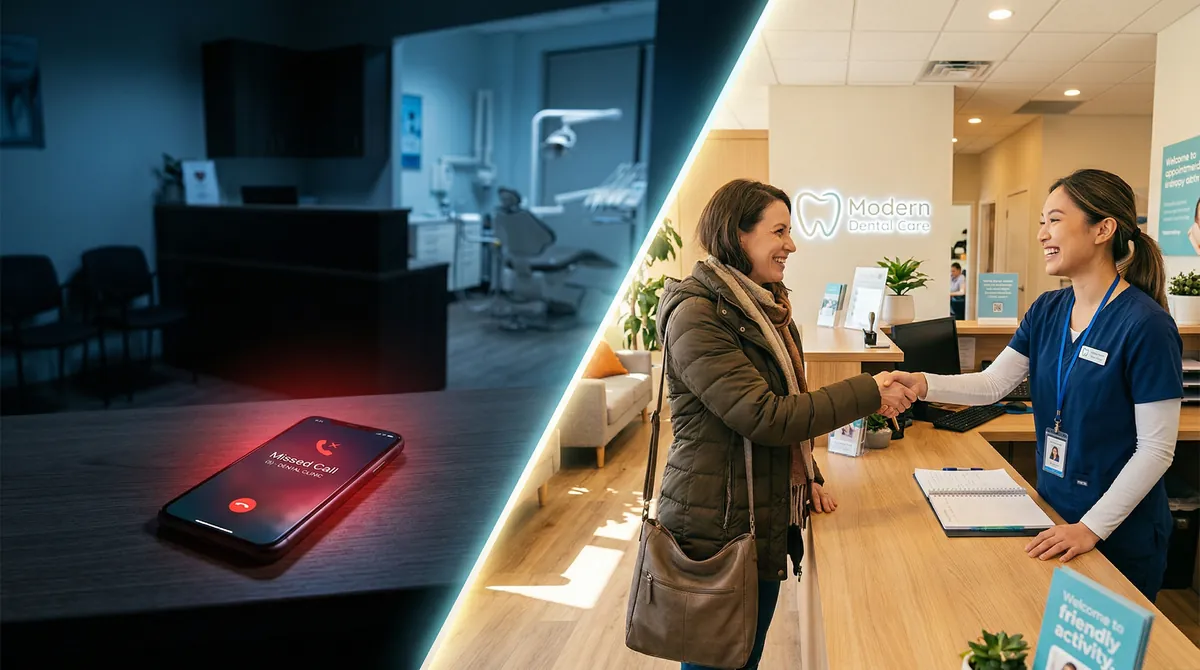
Your dental practice spends thousands each month driving phone calls — Google Ads, mailers, social media, referral programs. If you want to improve dental patient conversion rate, here’s the uncomfortable math: industry benchmarks suggest the average practice converts only about 23% of new patient calls into actual appointments. That means for every 100 people who pick up the phone to book, 77 hang up and call someone else.
At $250–$350 in average first-visit production (Dental Economics) — and a lifetime value estimated at $10,000 over 8–12 years — even a modest improvement can be worth six figures annually. This guide shows you how to improve dental patient conversion rate at every stage of the funnel.
- What Is a New Patient Conversion Rate?
- The Full Conversion Funnel — From Ring to Recall
- Five Conversion Killers Hiding in Your Practice
- How to Improve Dental Patient Conversion Rate — Stage by Stage
- Measuring and Tracking Your Conversion Rate
- What a 12% Call-to-Appointment Rate Actually Looks Like
- Conclusion
- Frequently Asked Questions
What Is a New Patient Conversion Rate?
Your new patient conversion rate measures the percentage of prospective patients who actually end up in your chair. The formula is simple: (new patients scheduled ÷ new patient inquiries) × 100.
But most practices get the denominator wrong. They count website form submissions or online booking requests and ignore the biggest channel: the phone. According to industry data, phone calls still drive the majority of new patient inquiries at dental practices, yet many offices don’t track call outcomes at all.
A practice that books 15 new patients from 80 inbound calls has an 18.75% conversion rate — not the 60% they calculated by only counting the 25 people who filled out a web form. If you want to improve dental patient conversion, you need to measure the full picture.
The Full Conversion Funnel — From Ring to Recall
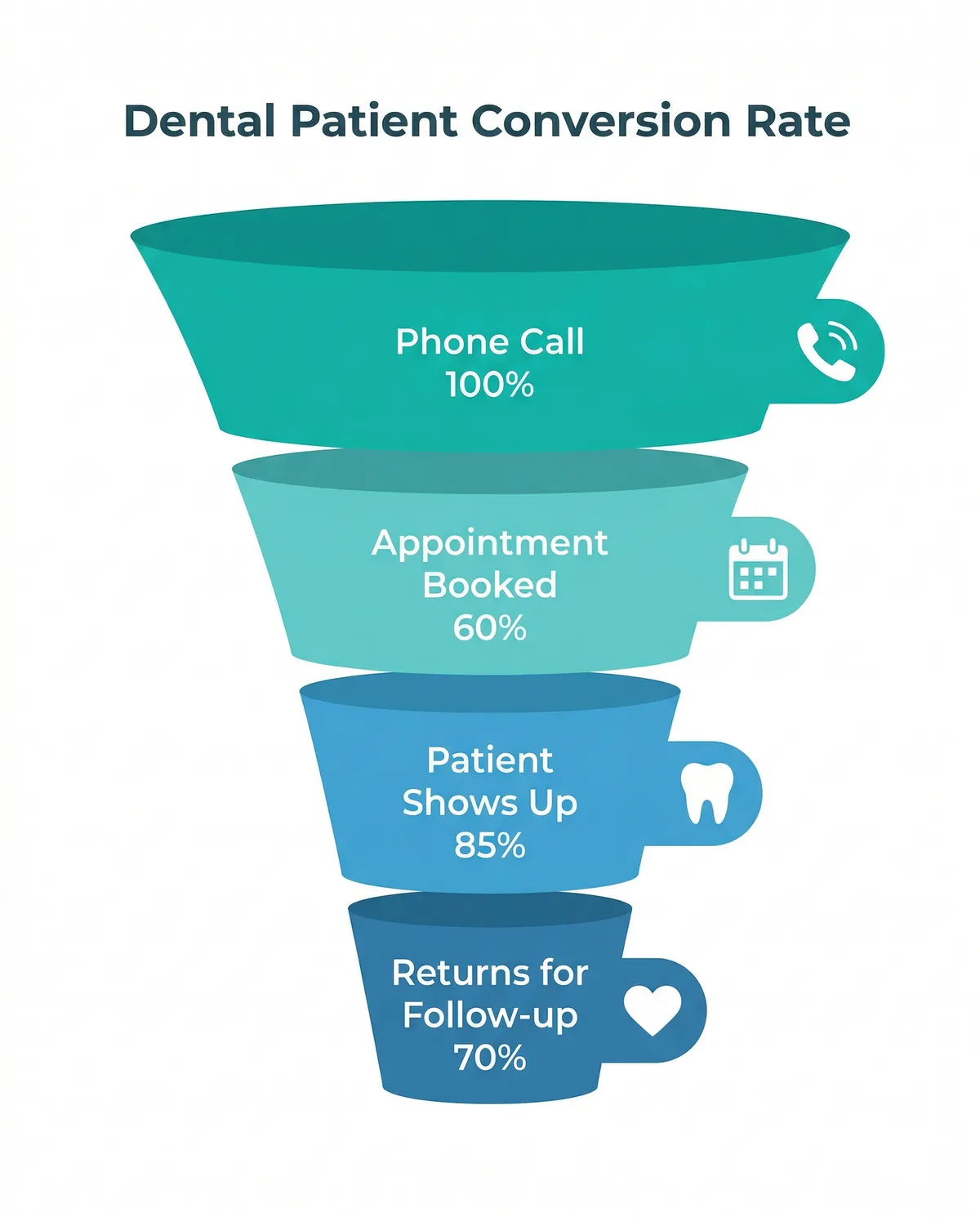
New patient conversion isn’t a single event. It’s a four-stage funnel, and your practice can lose patients at every stage. Understanding where the drop-offs happen is the first step toward fixing them.
Stage 1 — The Call Connects (or Doesn’t)
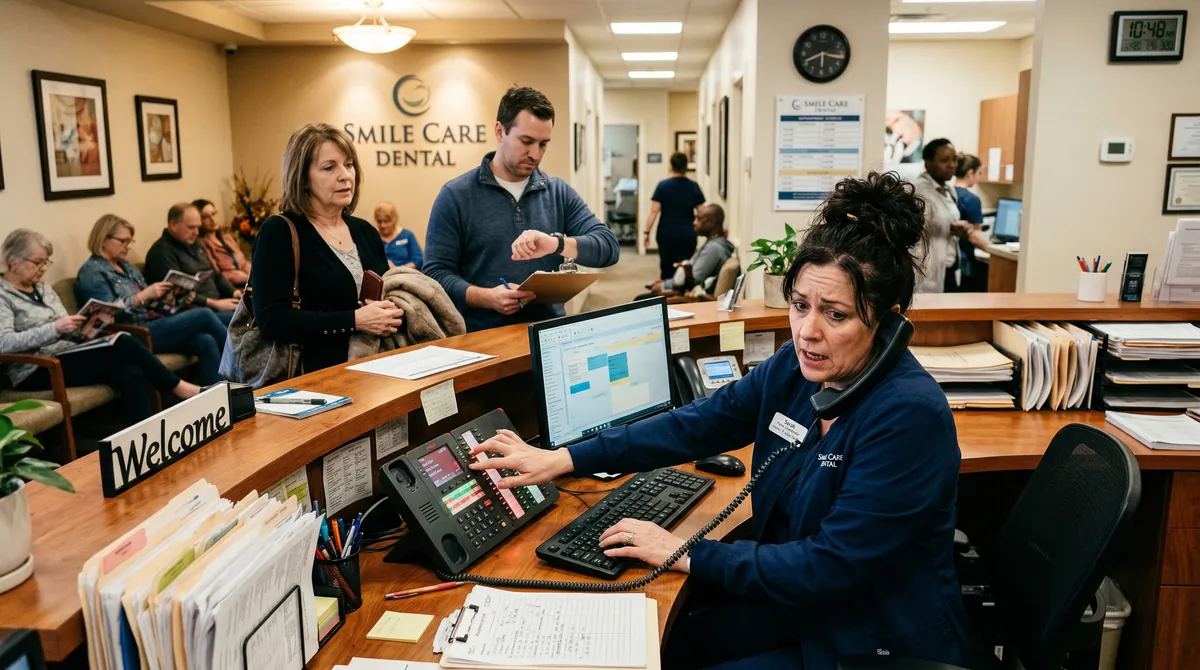
Before anyone can convert, someone has to answer the phone. This sounds obvious, but it’s where most practices hemorrhage the most potential revenue.
The average dental practice misses 30–40% of incoming calls. Only 14% of new patients bother to leave a voicemail — the rest call a competitor.
Those missed calls add up fast. Industry estimates put the annual cost of missed calls at $100,000 to $140,000 per practice. The top-performing offices answer 94% of inbound calls. If your front desk is juggling check-ins, insurance questions, and operatory support, hitting that number with human staff alone is nearly impossible — especially during lunch hours and after 5 p.m.
AI-powered phone systems have emerged as a practical solution here. Platforms like Dentina.Ai handle overflow and after-hours calls automatically, ensuring every call gets a live response — not a voicemail box. The calls that come in at 7:45 a.m. or 6:30 p.m. aren’t lost anymore.
Stage 2 — The Conversation Converts
Answering the phone is only half the battle. What happens during the conversation determines whether the caller books or bails. Practices that improve dental patient conversion rate focus here first.
| Metric | Average Practice | Top-Performing Practice |
|---|---|---|
| Calls answered | 75% | 94% |
| Answered calls converted to appointments | 53% | 85% |
| Overall call-to-appointment rate | ~23% | ~40%+ |
The gap between 53% and 85% comes down to a few consistent patterns. Top-converting practices greet callers by name and practice name within the first five seconds. They ask what prompted the call rather than jumping straight to insurance questions. And critically, they offer two specific appointment times instead of the open-ended “when would you like to come in?” — which puts the burden of decision on the caller and slows everything down.
Industry surveys suggest roughly half of new patients who don’t schedule cite poor customer service — especially being kept on hold — as the reason they didn’t book.
The difference between a conversion-first phone call and a transactional one is about 90 seconds of training. We’ll cover specific scripts in the fixes section below.
Stage 3 — The Appointment Sticks
A scheduled appointment isn’t a converted patient — not until they walk through the door. The average dental practice sees a no-show rate of 15–20%, and for new patients specifically, that number can climb higher because there’s no established relationship yet.
Confirmation sequences matter more than most practices realize. A single reminder call the day before isn’t enough. The highest-performing practices use a three-touch sequence: an immediate text confirmation at booking, an SMS reminder 48 hours before, and a final reminder the morning of the appointment. Since the vast majority of texts are read within minutes and a majority of consumers say texting is their preferred channel for appointment updates, SMS-based sequences dramatically outperform phone-only reminders.
Stage 4 — The Patient Returns
Conversion doesn’t end at the first visit. The real financial impact of a new patient comes from retention — turning that initial visit value into up to $10,000 in lifetime value over an average 8–12 year patient relationship.
The most effective retention tactic is also the simplest: rebook the next appointment before the patient leaves the chair. Practices that schedule the next hygiene visit at checkout retain patients at significantly higher rates than those that rely on recall postcards months later. Pair that with automated recall reminders — via text, not just mail — and you close the loop on the full conversion funnel.
Five Conversion Killers Hiding in Your Practice
Most practices don’t have a marketing problem. They have a conversion problem. To improve dental patient conversion rate, you need to identify and eliminate these five common killers:
1. Long hold times and phone trees. When a new patient calls your office, they want a human (or human-sounding) response in under 10 seconds. Multi-level phone trees (“Press 1 for appointments, press 2 for billing…”) signal that your practice prioritizes internal routing over patient experience. Every second on hold increases the chance they hang up and dial the next practice on Google.
2. Untrained or rushed greetings. “Smith Dental, hold please” is not a greeting — it’s a conversion killer. Your front desk team has roughly five seconds to make a first impression. A warm, specific greeting (“Good morning, thanks for calling Smith Dental, this is Julie — how can I help you today?”) sets the tone for a booking conversation rather than a transaction.
3. No follow-up on missed calls. If your practice doesn’t have a system to call back or text missed callers within 15 minutes, those patients are gone. Automated missed-call text-back systems — which send an immediate SMS like “Sorry we missed your call! We can help you schedule — reply here or we’ll call you back shortly” — recover a meaningful percentage of otherwise-lost opportunities.
4. Slow or friction-heavy scheduling. “Let me check with the doctor and call you back” is a death sentence for conversion. New patients want to book in real time. If your scheduling workflow requires callbacks, manual insurance verification before booking, or multiple steps, you’re creating friction that competitors have eliminated. Modern AI receptionists can check real-time availability in your PMS and book the appointment during the initial call — no callback needed.
5. Language barriers. In diverse communities, a caller who can’t communicate effectively with your front desk won’t book — period. If your patient base includes Spanish, Vietnamese, Arabic, or Mandarin speakers and your phone coverage only handles English, you’re losing patients before the conversation even starts. AI-powered platforms that support multilingual calls — AI receptionists like Dentina.Ai support up to 57 languages across five quality tiers — remove this barrier entirely.
Explore Dentina.Ai’s multilingual call handling options →
How to Improve Dental Patient Conversion Rate — Stage by Stage
Knowing the problems is step one. Here’s how to fix them, mapped to each stage of the funnel.
Answer Every Call (or Have AI Do It)
The single highest-ROI change most practices can make is ensuring every call gets answered. That doesn’t necessarily mean hiring more staff — it means covering the gaps where your current team can’t.
Start by identifying your drop-off windows. Pull your phone system’s call log for the past 30 days and flag missed calls by time of day. You’ll almost certainly see spikes during lunch (12–1 p.m.), early morning (before 8 a.m.), late afternoon (after 4:30 p.m.), and any time your front desk is handling a rush of check-ins.
For those windows, AI-powered overflow handling is the most cost-effective solution. Dentina.Ai, for instance, integrates directly with 14 major practice management systems — including Dentrix, Eaglesoft, Open Dental, and Curve — so it can check real-time availability and book appointments on the spot, without the patient ever knowing they didn’t speak to your staff.
Train Your Team on Conversion-First Phone Scripts
Your front desk doesn’t need to become a sales team. They need a framework. Here’s a proven four-step structure for new patient calls:
- Warm greeting — Practice name, your name, offer to help. (“Thanks for calling River Oak Dental, this is Maria, how can I help you today?”)
- Empathy and discovery — Ask what prompted the call. (“What brought you in to look for a dentist today?”) Listen before jumping to logistics.
- Two-slot close — Offer two specific times. (“I have an opening this Thursday at 10 a.m. or next Monday at 2 p.m. — which works better for you?”)
- Confirm and welcome — Repeat the details and make them feel expected. (“You’re all set for Thursday at 10. We’ll text you a confirmation and a reminder the day before. We look forward to meeting you!”)
This takes less than three minutes per call and can double conversion rates from phone training alone.
Automate Follow-Ups Before Patients Forget
Speed matters. A patient who hangs up without booking is already Googling alternatives. Automated follow-up systems — especially SMS-based — can recapture these leads before they go cold.
Some practices report that automated follow-up sequences can increase conversion rates by as much as 47% (LassoMD).
The ideal follow-up stack includes an immediate missed-call text-back (within 60 seconds), a personalized SMS if no appointment is booked within 24 hours, and a final follow-up at 72 hours. AI receptionists can send SMS follow-ups automatically after every interaction, keeping the booking conversation alive without adding any manual work for your team.
Learn how Dentina.Ai automates SMS follow-ups →
Measuring and Tracking Your Conversion Rate
You can’t improve what you don’t measure. Here’s a simple framework for tracking your new patient conversion rate dentist teams can implement this week:
| Metric | Formula | Benchmark | Track |
|---|---|---|---|
| Call answer rate | Calls answered ÷ total inbound calls | 90%+ | Weekly |
| Call-to-appointment rate | Appointments booked ÷ calls answered | 50–85% | Weekly |
| New patient show-up rate | Patients who arrived ÷ appointments booked | 80–85%+ | Monthly |
| Overall conversion rate | New patients seen ÷ total new patient inquiries | 30–40%+ | Monthly |
| Cost per acquired patient | Total marketing spend ÷ new patients seen | Varies by channel (track per-channel to optimize) | Monthly |
Set up a simple spreadsheet or use your call tracking software’s built-in reporting. Review the numbers weekly with your front desk team — not as a performance review, but as a coaching tool. When you spot a week where call-to-appointment rate dipped, listen to a few calls from that period. You’ll usually find the fix within minutes.
What a 12% Call-to-Appointment Rate Actually Looks Like
Let’s put this into real numbers. Say your practice receives 500 total inbound calls per month. Not all of those are new patient inquiries — many are existing patients confirming appointments, asking billing questions, or requesting refills. A realistic breakdown might be 60% existing patients and 40% potential scheduling calls (both new and existing).
If an AI-powered system achieves a 12% call-to-appointment conversion rate across all interactive calls, that means 60 booked appointments per month from phone interactions alone. When 40% of those are new patients, that’s 24 new patients monthly — directly from calls that might otherwise have gone to voicemail.
24 new patients per month × $300 average first-visit production = $7,200 in immediate first-visit revenue per month, with each patient representing up to $10,000 in lifetime value.
That’s not a hypothetical. Those are the benchmarks Dentina.Ai practices see: a 12% call-to-appointment conversion rate with 40% of booked appointments being new patients. For a practice spending $5,000–$10,000/month on marketing, that conversion efficiency means the phone system alone can deliver a 2–4x return on the entire marketing budget.
Conclusion
You can improve dental patient conversion rate without a bigger marketing budget. It requires closing the gaps between the calls you’re already generating and the appointments you’re actually booking. Three things to do this week:
- Audit your call answer rate. Pull your phone logs for the past 30 days and calculate the percentage of calls answered live. If it’s below 90%, that’s your highest-priority fix.
- Listen to five new patient calls. Are your team members using a warm greeting, asking discovery questions, and offering specific times? Small script adjustments can move the needle fast.
- Set up missed-call follow-up. Whether it’s an automated text-back system or an AI receptionist that handles the call in real time, stop letting unanswered calls walk out the door.
Every call that rings is a patient choosing you. The only question is whether your practice is ready to convert that choice into an appointment. If you’re looking for a hands-off way to cover the gaps, an AI-powered receptionist that books directly into your PMS can turn your phone line into your most reliable growth channel.
Book a free demo to see how Dentina.Ai converts more patient calls →
Frequently Asked Questions
What is a good new patient conversion rate for a dental practice?
A solid benchmark is 30–40%. The average practice converts about 23% of new patient calls into appointments, while top-performing offices exceed 40%. If you’re below 25%, there are likely quick wins available in your phone handling and follow-up processes.
How do I calculate my practice’s conversion rate?
Divide the number of new patients who scheduled appointments by the total number of new patient inquiries (phone calls + web forms + walk-ins), then multiply by 100. Track this monthly and break it down by source to see where your best leads come from.
Why do dental practices lose new patients on the phone?
The most common reasons are missed calls (30–40% go unanswered), long hold times, impersonal greetings, and failing to offer specific appointment slots. Only 14% of new patients leave a voicemail, so a missed call almost always means a lost patient.
Can AI receptionists actually book dental appointments?
Yes. Modern AI receptionists integrate directly with practice management systems to check real-time availability and schedule appointments during the call. They handle after-hours calls, overflow during busy periods, and can communicate in multiple languages — functioning as an extension of your front desk team.
How much revenue does a missed call cost a dental practice?
Each missed new patient call represents approximately $250–$350 in first-visit production (Dental Economics) and a potential lifetime value of up to $10,000. Across a year, missed calls cost the average practice $100,000 to $140,000 in unrealized revenue.
Sources
Dental Economics — Revenue Benchmarks and Production Per Visit
LassoMD — Dental Marketing Growth Hacks (47% Follow-Up Conversion Data)
Resonate AI — Missed Calls in Dental Practices Statistics
Weave — Dental Practice Communication Data
TrueLark — Analysis of 8 Million Patient Conversations
Peerlogic — Dental Call Tracking Study