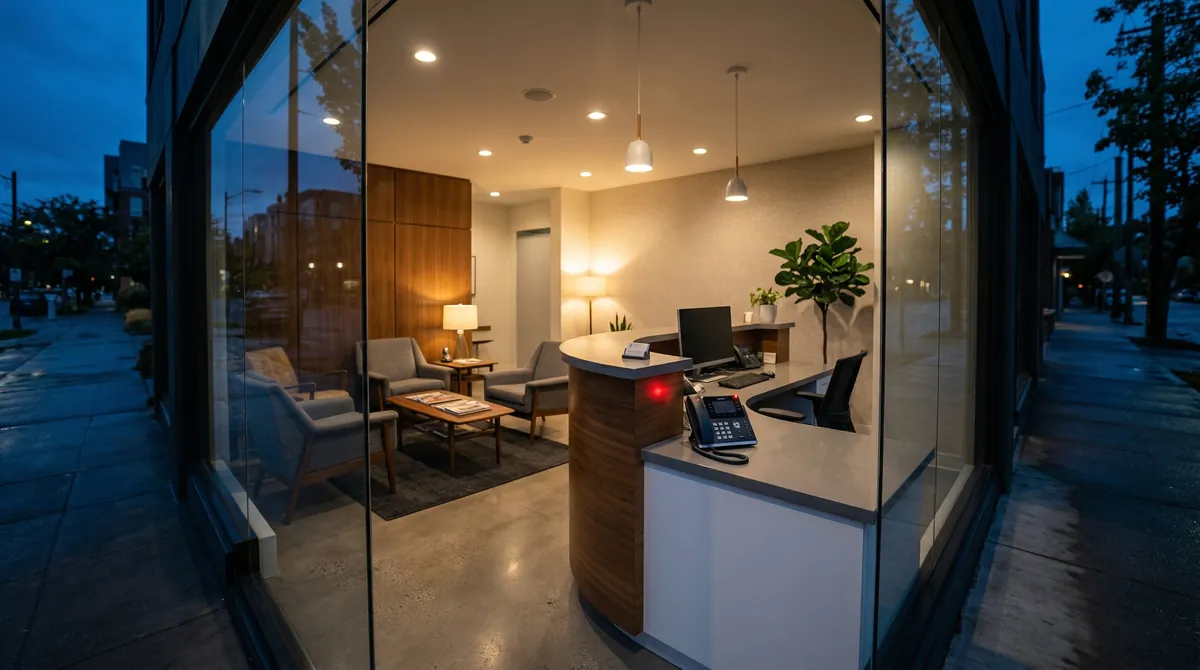
Nearly half of all dental appointment requests happen outside of standard office hours. That means while your team clocks out at 5 PM, prospective patients are searching for a dentist, picking up the phone, and making decisions about where to book — all while your office sits dark and your phone rolls to voicemail. For most practices, after hours dental appointments represent the single largest untapped revenue channel hiding in plain sight.
This article breaks down exactly how much revenue your practice leaves on the table every evening, weekend, and holiday — and what the practices that are growing fastest are doing differently to capture it.
Key takeaways: Roughly 47% of dental appointment requests come in outside business hours, yet 87% of patients who reach voicemail hang up without leaving a message. Practices that implement 24/7 call handling report booking an average of 1.5 additional new patients per week from after-hours calls alone. Each of those patients represents approximately $8,000 in lifetime value — meaning the after-hours window can quietly add six figures in annual revenue without extending your office hours by a single minute.
Why Patients Call After Hours (It’s Not Just Emergencies)
There’s a common misconception that after-hours calls are mostly emergencies — cracked teeth, sudden pain, post-surgical complications. While emergencies do account for a portion (the American Dental Education Association notes that 63% of dental emergencies occur outside standard business hours), the larger share of evening and weekend calls is far more routine than most practice owners realize.
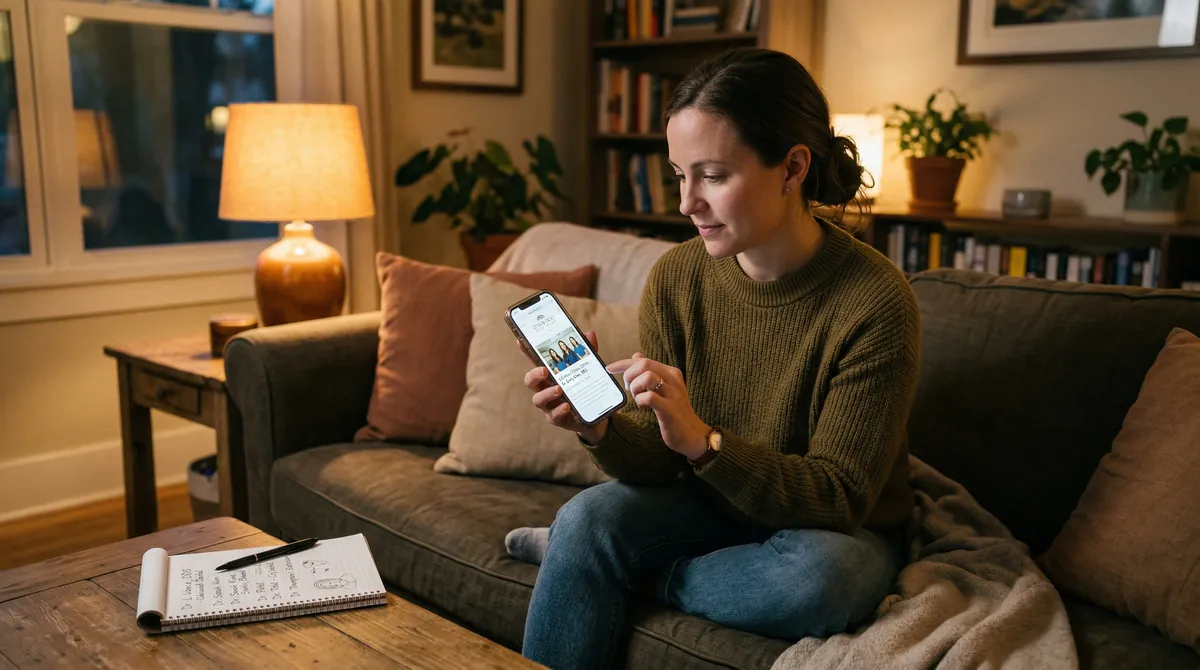
Working adults make up the bulk of after-hours callers. They spend their days in meetings, managing kids, or on job sites. The earliest they can think about scheduling a cleaning or following up on that nagging sensitivity is after dinner. They pull up Google, compare a few practices, check reviews, and call the one that looks best. These are the people driving the demand for after hours dental appointments — and they’re calling whether your office is open or not.
The Evening Research-to-Call Pipeline
Patient behavior follows a predictable pattern. Between 6 PM and 10 PM on weekdays, search volume for dental services spikes. A prospective patient notices a dental issue, researches providers on their phone, reads a few Google reviews, and decides to call. According to industry data tracked by Resonate AI, this evening window generates a disproportionate share of new patient inquiries — and the practices that answer during this window capture them.
Weekends follow a similar pattern. Saturday and Sunday mornings between 9 AM and 1 PM see a second wave of dental-related calls, often from patients who’ve been putting off booking all week. These aren’t panicked callers looking for emergency care. They’re ready-to-book callers who want after hours dental appointments on their own schedule and just need someone to pick up.
The Real Cost of Missing After Hours Dental Appointments
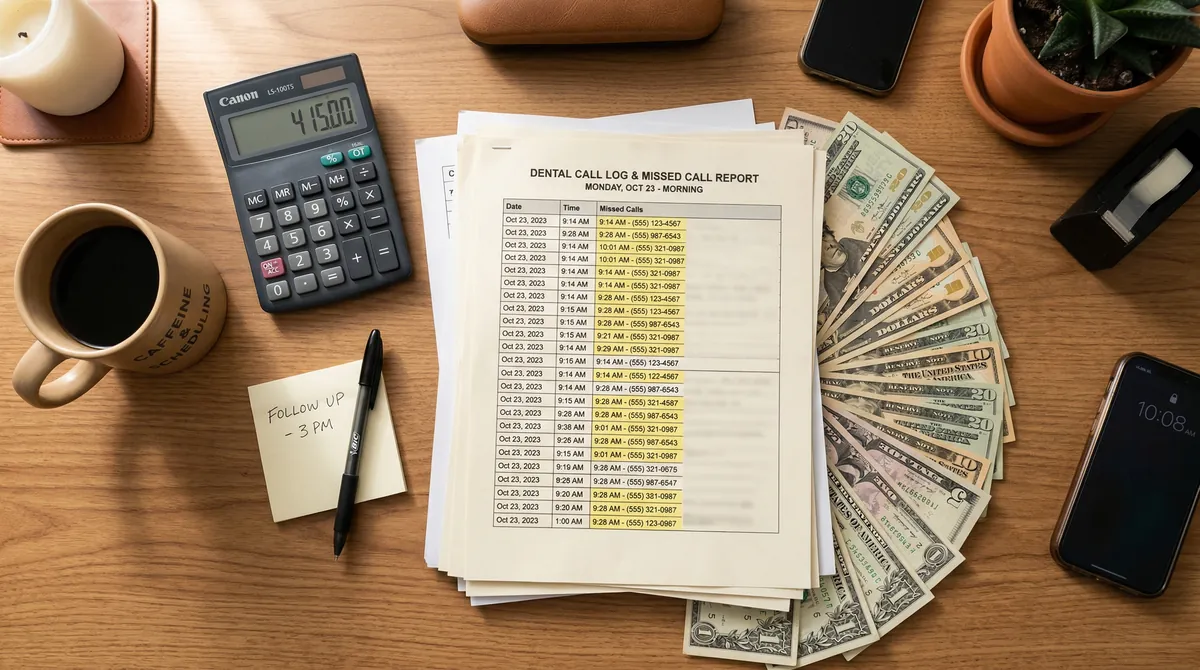
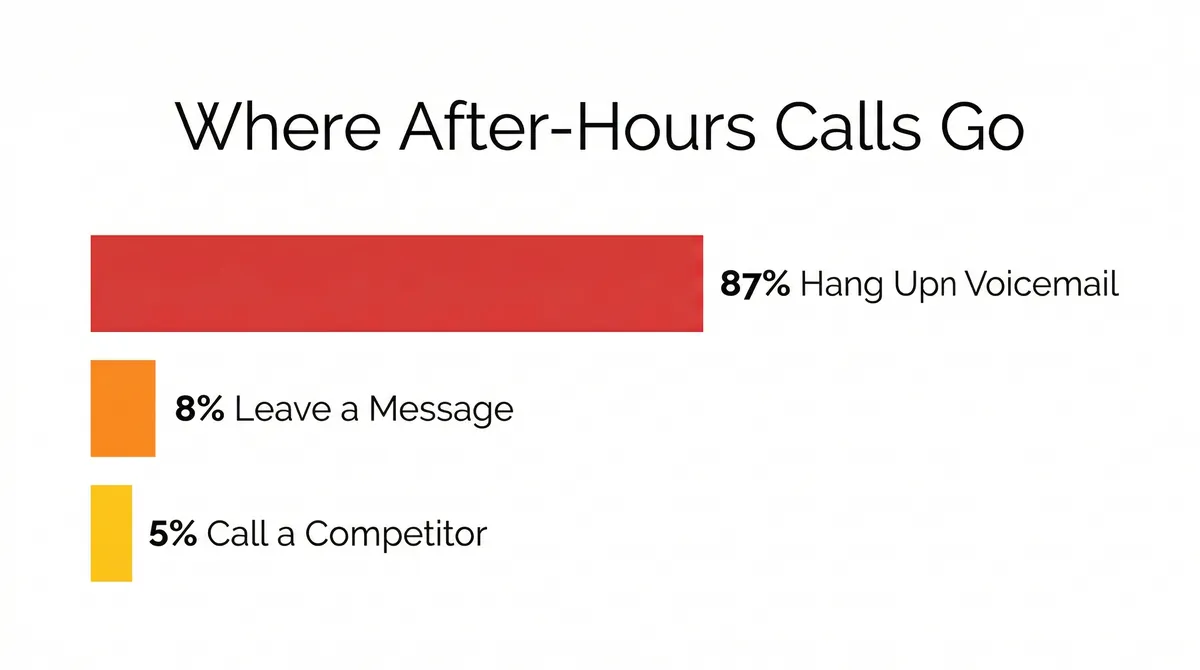
Here’s where the math gets uncomfortable. When a patient calls your practice after hours and reaches voicemail, the overwhelming majority don’t leave a message. Research from multiple dental industry analyses puts that number at 87%. They hang up and call the next practice on their list — or they abandon the idea entirely and you never hear from them.
What makes this worse is who these callers are. Data from Resonate AI shows that 58% of interactions involving missed calls come from new patients. Not existing patients rescheduling a cleaning — new patients actively choosing a provider. These are the highest-value calls your phone rings with.
A single missed new patient call costs your practice approximately $850 in immediate treatment revenue. Over the lifetime of that patient relationship, you’re looking at roughly $8,000 in lost value.
Scale that across an average of 15–25 missed after-hours calls per week, and the annual revenue leak becomes staggering. DenteMax estimates that dental practices lose between $100,000 and $150,000 per year from missed calls — and after-hours calls make up a significant share of that total.
After-Hours Missed Call Cost Calculator
| Missed After-Hours Calls/Week | New Patient Calls (58%) | Immediate Revenue Lost/Week | Annual Revenue Lost |
|---|---|---|---|
| 10 | ~6 | $5,100 | $265,200 |
| 15 | ~9 | $7,650 | $397,800 |
| 20 | ~12 | $10,200 | $530,400 |
| 25 | ~15 | $12,750 | $663,000 |
Based on $850 average new patient first-visit revenue. Actual figures vary by practice, location, and case mix.
What Happens When You Actually Answer
The flip side of these losses is the opportunity. Practices that capture after hours dental appointments through round-the-clock call handling consistently report measurable growth — and the results show up fast.
According to a Mediaffy industry analysis, practices using 24/7 answering solutions see a 32% increase in appointment bookings compared to those relying solely on in-house staff during business hours. For a small to mid-size practice, that translates to roughly 1.5 additional new patients booked per week from after-hours calls alone.
At an average lifetime patient value of $8,000, booking just 1.5 extra new patients per week from after-hours calls adds $624,000 in lifetime revenue per year.
Consider a real-world scenario. A 5-operatory general practice in a mid-size metro area currently closes at 5 PM and forwards calls to voicemail. They miss an estimated 18 after-hours calls per week. After implementing AI-powered 24/7 call handling that schedules directly into their practice management system, they begin converting 6–8 of those calls into booked appointments weekly — without hiring additional staff, without extending hours, and without changing a single workflow during the business day.
Within the first month, the practice books 7 new patients it would have otherwise lost to competitors. Within a quarter, they’ve added over $60,000 in scheduled treatment value — all from after hours dental appointments that previously went to voicemail.
Three Ways Practices Handle After Hours Dental Appointments
Not all after-hours solutions are created equal. The way your practice manages after hours dental appointments has a direct impact on how many of those callers become patients. Here’s how the three most common approaches compare.
Voicemail and Next-Day Callbacks
This is the default for most practices — and the least effective option by a wide margin. The math is simple: if 87% of callers hang up without leaving a message, your callback list captures barely one in ten after-hours inquiries. The other nine callers have already booked somewhere else by the time your front desk arrives the next morning.
Voicemail costs nothing to maintain, which is its only advantage. But the revenue it silently forfeits dwarfs any savings.
Traditional Answering Services
Live answering services solve the pickup problem — a real person answers the phone. But they introduce new friction. Most answering service agents can’t access your practice management system. They take a message, promise a callback, and the patient still waits. Per-minute billing adds up quickly (often $1.50–$3.00 per minute), and quality varies widely. The agent handling your dental calls at 9 PM may also be fielding calls for a plumbing company and a law firm.
For emergency triage, answering services work adequately. For actually booking appointments, they fall short.
AI-Powered 24/7 Call Handling
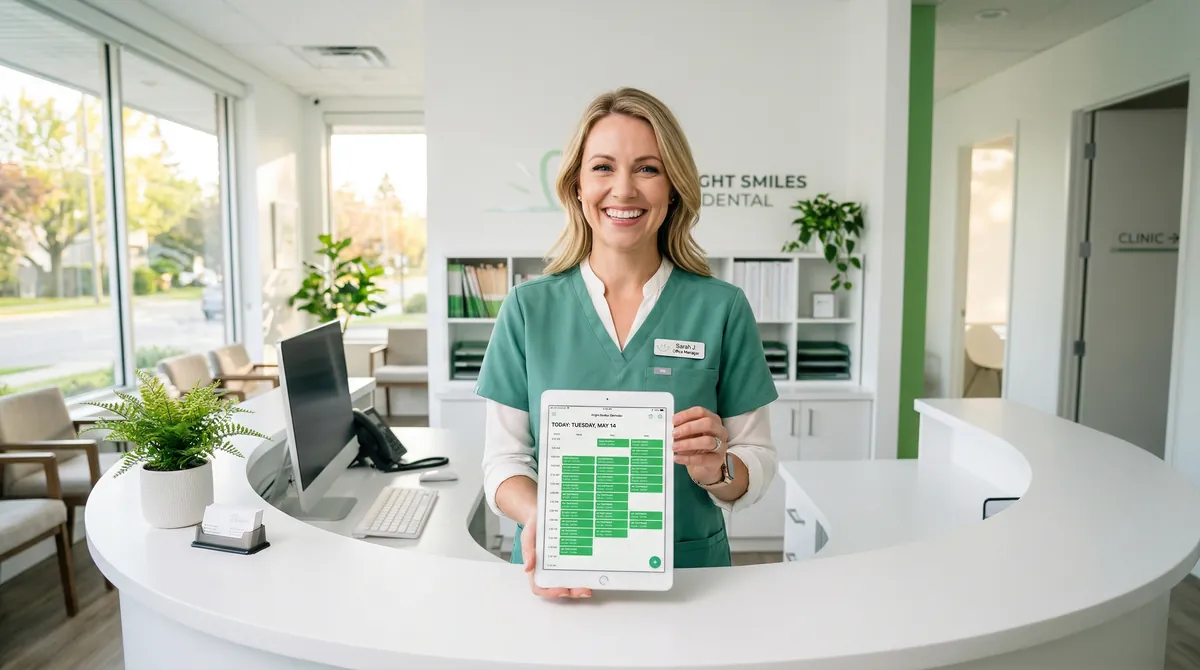
The newest category — and the one reshaping how dental practices approach after-hours patient access. AI receptionists like Dentina.Ai handle the full scope of what a trained front desk team member would do: answer calls, schedule appointments directly into the practice management system, reschedule or cancel existing appointments, answer routine questions about hours, insurance, and services, and send follow-up texts to patients.
Because the AI integrates directly with the PMS, there’s no message-taking and no callback delay. A patient who calls at 9:30 PM to book a cleaning is confirmed and on the schedule before they go to bed. Dentina.Ai supports this across 14 major practice management systems — including Dentrix, Eaglesoft, Open Dental, and Denticon — and handles calls in 57 languages with unlimited minutes included.
| Feature | Voicemail | Answering Service | AI Call Handling |
|---|---|---|---|
| After-hours calls answered | 0% | ~95% | 100% |
| Appointments booked in real time | No | No (message only) | Yes (direct PMS booking) |
| Patient wait for confirmation | Next business day | Next business day | Immediate |
| Cost structure | Free | $1.50–$3.00/min | Flat monthly rate |
| Simultaneous call capacity | 1 (then busy signal) | Limited by staffing | Unlimited |
| Multilingual support | No | Limited | 57 languages |
| HIPAA compliant | Varies | Varies | Yes |
What to Look for in an After-Hours Solution
If you’re evaluating options for capturing after-hours dental appointments, these are the capabilities that separate solutions that actually grow your practice from those that just check a box.
Direct PMS integration. The solution should book, reschedule, and cancel appointments directly in your practice management system — no intermediary steps, no message pads, no next-day data entry by your front desk. If it can’t write to your schedule in real time, patients still wait, and your team still has morning admin work.
Unlimited calls and minutes. Per-minute billing creates a perverse incentive: the more patients call, the more you pay. A flat-rate model with unlimited calls means your after-hours line is a pure revenue channel with no variable cost creep. This is especially important during high-call periods like Monday mornings and post-holiday weekends.
Multilingual capability. In many metro areas, a significant portion of your patient base speaks a language other than English at home. A solution that only handles English-language calls misses a meaningful slice of your community. Look for broad language coverage — not just Spanish, but the languages your specific patient population speaks.
HIPAA compliance. Any system handling patient information — names, appointment details, insurance data — must meet HIPAA standards with end-to-end encryption and proper data handling. This isn’t optional; it’s a legal and ethical requirement.
Simultaneous call handling. A busy Friday evening might generate three or four calls in the span of ten minutes. If your after-hours system can only handle one call at a time, the rest go to voicemail — and you’re back to square one. The best AI-powered platforms handle unlimited concurrent calls, so no patient ever hears a busy signal.
Dentina.Ai, for example, checks every one of these boxes: direct integration with 14 PMS platforms, unlimited calls and minutes on a flat monthly rate, 57-language support, full HIPAA compliance, and unlimited simultaneous call capacity. For practices that want to capture after-hours revenue without adding headcount or extending office hours, it’s purpose-built for exactly this use case.
Conclusion
After hours dental appointments aren’t a gap in your schedule to apologize for. They’re the easiest growth lever most dental practices haven’t pulled yet. While your competitors’ phones ring to voicemail at 5:01 PM, every call you answer — every appointment you book — is a patient they’ll never see.
The practices growing fastest right now aren’t necessarily spending more on marketing or adding operatories. They’re simply available when patients are ready to book. And when the majority of callers who reach voicemail never call back — they simply try the next practice on their list — being available after hours isn’t just a convenience. It’s a deciding factor in which practice they choose.
Start by auditing your own after-hours call volume. Check your phone system’s missed call logs for evenings, weekends, and holidays over the past 90 days. Multiply the number of missed calls by $850. That’s the minimum revenue sitting on the table right now. Then ask yourself: what would it mean for your practice if you captured even half of it?
Frequently Asked Questions
How many new patients can a practice realistically book from after-hours calls?
Industry data shows that practices implementing 24/7 call handling typically book an average of 1.5 additional new patients per week from after-hours calls. Results vary based on location, marketing spend, and patient demographics, but even practices in smaller markets consistently report measurable gains within the first month.
Do I need to extend my office hours to capture after-hours appointments?
No. After hours dental appointments are about capturing the booking outside office hours — the actual appointment still happens during your normal schedule. AI-powered call handling books patients directly into your open slots, so your team arrives in the morning to a fuller schedule without any additional work.
What types of calls come in after hours besides emergencies?
The majority of after-hours calls are routine: new patients wanting to book an initial visit, existing patients rescheduling or canceling, and general inquiries about services, insurance, or office hours. Emergencies are a smaller share than most practice owners expect.
How does AI call handling compare to a traditional answering service for dental practices?
Traditional answering services take messages but can’t book appointments in real time. AI-powered platforms like Dentina.Ai integrate directly with your practice management system to schedule, reschedule, and cancel appointments on the spot — so patients are confirmed immediately instead of waiting for a next-day callback.
Is it worth investing in after-hours call handling for a small or solo practice?
Small practices often benefit the most from after hours dental appointments. A solo practitioner or small office has less capacity to absorb missed calls during the day, making after-hours coverage even more critical for patient acquisition. Booking just one or two additional new patients per week can significantly impact a small practice’s bottom line.
Sources
Resonate AI — 18 Missed Calls in Dental Practices Statistics ·
DenteMax — Why Missed Phone Calls Are Dental Offices’ Largest Revenue Loss (2025) ·
Mediaffy — After-Hours Dental Answering Service: Complete Guide (2026) ·
AgentZap — Dental Practice Phone Statistics: 15 Numbers Every Dentist Should Know (2026) ·
Resonate AI — How to Bridge the Gap in Patient Communication During Non-Business Hours ·
American Dental Association — Dental Practice Research & Economics